
History
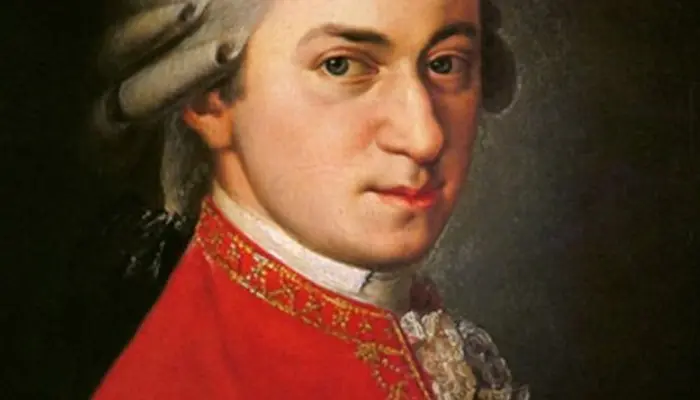
Wolfgang Amadeus Mozart (1756–1791) was a prolific and influential composer of the Classical era, widely regarded as one of the most gifted musicians in history. Born in Salzburg, he demonstrated extraordinary ability from early childhood, composing his first pieces at age five and performing before European royalty. Under the guidance of his father, Leopold Mozart, he toured extensively during his youth, absorbing the diverse musical styles of Europe's cultural capitals.
Early Life and Prodigious Talent
Mozart's early years were defined by his status as a child prodigy. Along with his sister Maria Anna ("Nannerl"), he traveled to major musical centers including Vienna, Paris, and London. These travels exposed him to the leading musicians of the day, notably Johann Christian Bach, who influenced his early symphonic style. By his teenage years, Mozart was an accomplished violinist and keyboardist, serving as a court musician for the Archbishop of Salzburg. However, his desire for artistic freedom eventually led him to leave his hometown to establish a freelance career in Vienna.
The Vienna Years and Mature Works
In 1781, Mozart settled in Vienna, where he achieved his greatest professional success. During this decade, he composed many of his most celebrated works, including the operas The Marriage of Figaro, Don Giovanni, and Così fan tutte. His output was immense, encompassing 41 symphonies, 27 piano concertos, and a significant body of chamber music, including the "Haydn" Quartets. Mozart’s music is characterized by its melodic clarity, formal balance, and a sophisticated use of harmony that often hinted at the emotional complexity of the later Romantic period.
Final Years and Lasting Influence
Despite his fame, Mozart often struggled with financial instability. His final year, 1791, was a period of intense creative output despite his declining health. During this time, he composed The Magic Flute and began work on his Requiem, which remained unfinished at the time of his death at age 35. Mozart’s influence on Western music is profound; his work served as a primary model for Ludwig van Beethoven and Franz Schubert. Today, his compositions are organized by the Köchel catalogue (K. numbers) and remain central to the global classical repertoire.
Discography