
History
Laibach: A Provocative Force in Industrial Music
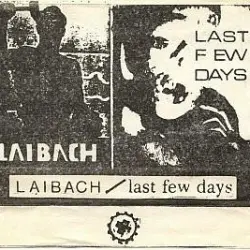
Emerging from Trbovlje, Slovenia, in 1980, Laibach established itself as a pioneering industrial music project. The band's name, a German moniker for Slovenia's capital, Ljubljana, immediately signaled their penchant for provocative and ambiguous statements, a characteristic that would define their extensive and evolving career. Laibach was a foundational member of the NSK (Neue Slowenische Kunst – "New Slovenian Art") art movement, leaving a significant imprint on their homeland's cultural landscape.
Artistic Philosophy and Cover Versions
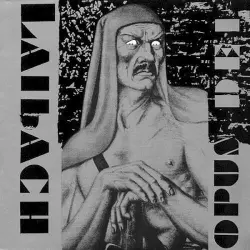
Laibach gained particular recognition for their distinctive approach to cover songs. By reinterpreting popular tracks, they aimed to expose hidden or overlooked messages, often commenting on political totalitarianism and the dictatorial aspects of rock stardom. This strategy was notably successful on the album Opus Dei, especially with their rendition of Queen's "One Vision." Retitled "Geburt Einer Nation" and set to a militaristic rhythm, the German lyrics transformed familiar lines into unsettling echoes of totalitarian ideology.
Original Works and Political Stance
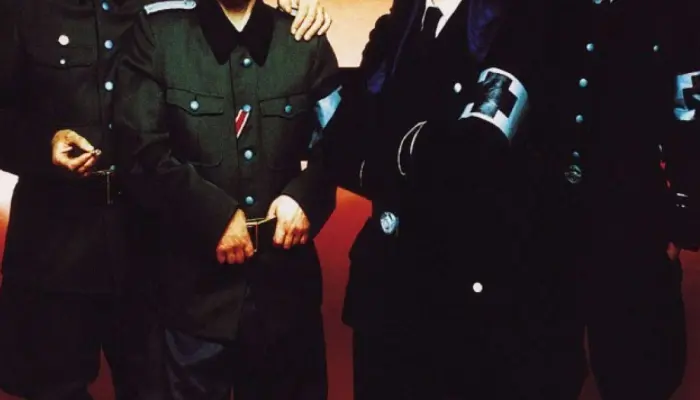
While their covers garnered attention, the core of Laibach's output consists of original material. Their early explorations of totalitarian themes led to them being banned in Communist Yugoslavia, forcing the band to use their black-cross emblem on posters in lieu of their name. This engagement with power structures and ideology continues to inform their work, often incorporating self-referential humor and in-jokes accumulated over decades of artistic practice.
Musical Evolution
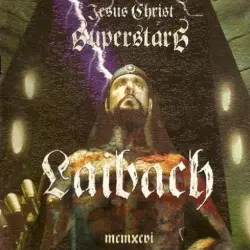
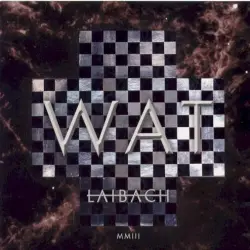
Laibach's musical style has demonstrated remarkable versatility. Beginning as avant-garde industrial musicians experimenting with ambient noise, they soon embraced martial rhythms. Following the dissolution of Yugoslavia, their album Kapital incorporated hip-hop and techno influences within a bombastic framework. Subsequent releases saw further sonic diversification, with Jesus Christ Superstars featuring heavy metal guitar riffs and WAT (2003) returning to electronic sounds through collaboration with techno producer Umek.
Later Projects and Collaborations
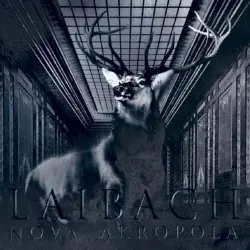
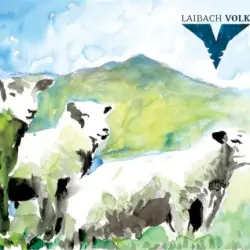
Volk, released in 2006, was inspired by national anthems and featured collaborations with Silence. In 2008, Laibach released Kunst der Fuge, a reinterpretation of Johann Sebastian Bach's "The Art of Fugue," which had premiered the previous year at the Bachfest festival in Leipzig. The project VOLKSWAGNER (2009) saw Laibach collaborating with the RTV Slovenia Symphony Orchestra and conductor Izidor Leitinger to create a symphonic electronic suite interpreting Wagnerian motifs, exploring their connection to modernism and avant-garde jazz.
In 2012, Laibach contributed to the soundtrack for the film Iron Sky, a science fiction movie about moon-based Nazis, co-writing and producing the score with Ben Watkins.
Discography